
HOUSE
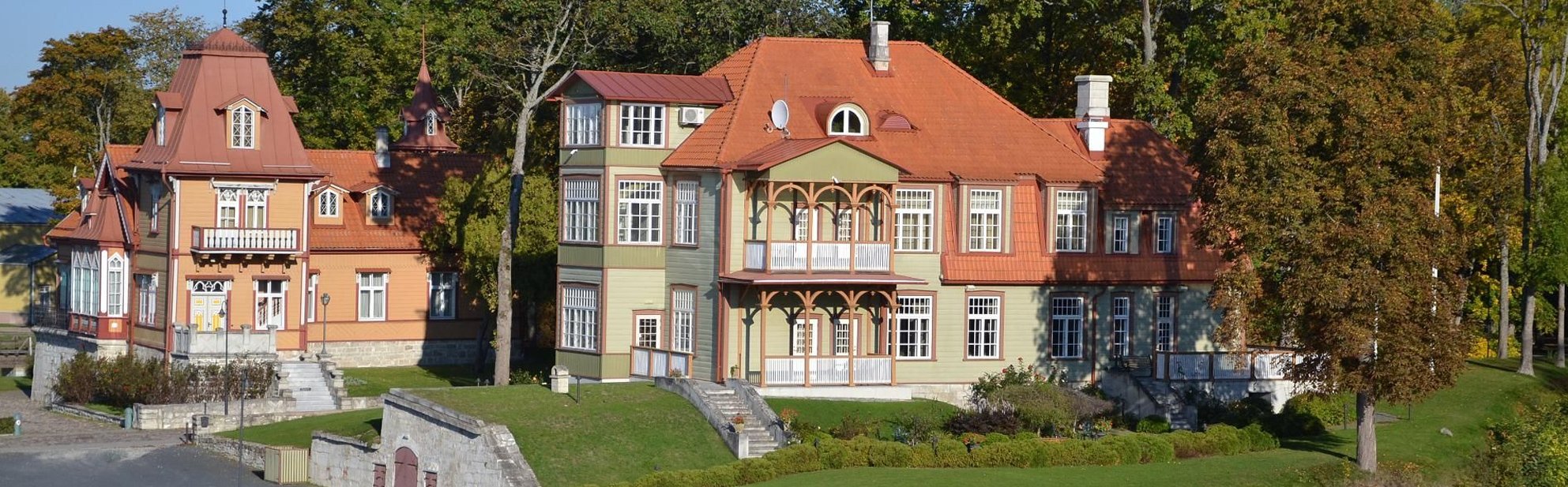
The colorful and exciting history of the house at 27 Lossi Street in Kuressaare gives it significant added value, which at different times has been appreciated by many important figures in Estonian culture and society.
If only the walls could speak, we would be able to witness the schoolboys’ pranks, the slightly bohemian company in the days of the “Siuru Castle”, Mrs Elisabeth Pohl’s activities in running the boarding house and vegetarian restaurant, etc. Different owners have treated the house in their care both well and poorly, yet the character of the building that has survived to this day is still suggested by the clearly perceptible positive aura. The creative, romantic and somewhat even tragic history of the house evokes tenderness in the hearts of the new owners as well, whose aim is to share with their guests the values in which they themselves believe and to whose restoration they have devoted themselves wholeheartedly.
Today’s Ekesparre Hotel represents everything that we value the most: privacy, the right to be oneself, and consistent quality in every little detail!
HISTORICAL OVERVIEW
NORTHEAST RAVELIN OF KURESSAARE CASTLE
The major reconstruction and extension of the fortifications of Kuressaare episcopal castle took place in the second half of the 17th century. In connection with the increase in the number of cannons and their placement in forward positions, three ravelins were built in the widened moat, later colloquially called small town heads. Access to the castle was through the northeast ravelin, and a smithy for maintaining the cannons was built there, part of whose foundations lie beneath today’s Ekesparre Boutique Hotel.
In the 19th century, when the castle had lost its defensive function and been handed over to the Saaremaa knighthood, the ravelins evoked nostalgic feelings among the nobles, most of whom had received a military education in so‑called cadet corps maintained at the expense of the state, reminding them of the best years of their youth.
THE EKESPARRE BROTHERS
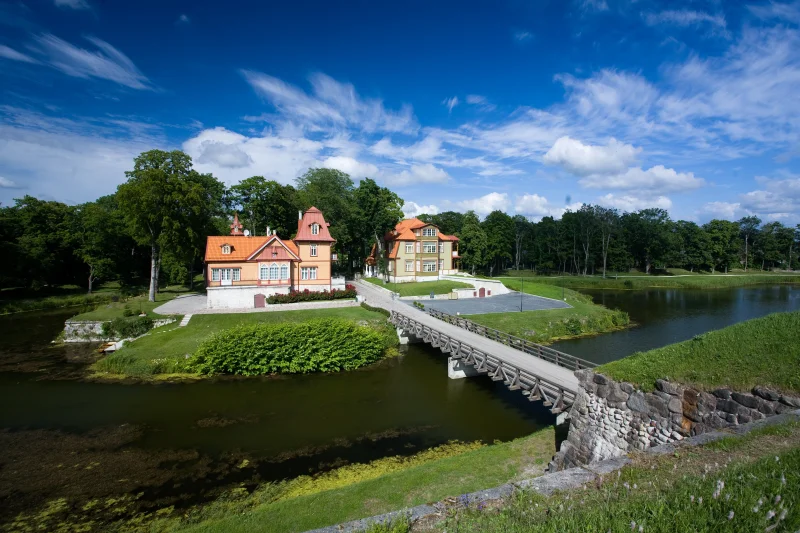
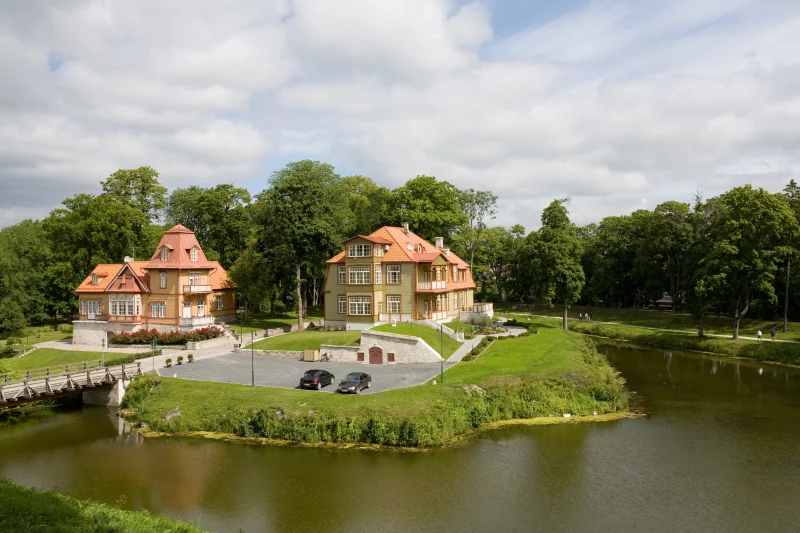
Alfred, the brother of the chairman (Landmarschall) of the knighthood, Oskar von Ekesparre, was a retired artillery officer and wished to build a representative villa for himself on the northeast ravelin. The chairman of the knighthood assisted with formalising the plot, and in 1890 a house was completed on the side of the ravelin facing the Kurhaus, which is nowadays called the hunting lodge. In fact, Alfred von Ekesparre, who himself mainly lived in St Petersburg, used his house to rent out to wealthy summer guests, the so‑called patisaks. At the beginning of the 20th century, taking health cures in Kuressaare, Haapsalu and Pärnu was very fashionable, which brought significant income to the resort towns, including to the owners of rental apartments.
The Landmarschall’s eldest brother, Arthur Peter Leopold von Ekesparre (1838–1909), was a lawyer by education and worked for a long time in Tartu as a district judge. Upon his retirement he moved to live at Eikla Manor. Seeing his brother’s success with accommodating summer visitors, Arthur decided to invest his savings likewise in the accommodation business. Since Alfred’s house had been built with a bachelor’s own comforts in mind and therefore accommodated few different families, Arthur proposed the idea of building, on the same ravelin, opposite his brother’s house, a boarding house with many furnished rooms which would be just as eye‑catching in appearance. As his brother the Landmarschall’s term of office was coming to an end when the idea arose, the formalisation of the building plot was hurried through and construction began as Oskar von Ekesparre, who had led the Saaremaa knighthood for thirty years, departed for St Petersburg as a member of the State Council.
The author of the design of the house in question is not known, because the original file of the property apparently perished in 1917, when revolutionary soldiers looted and burned the records of the land registration office. To a person with little literacy, the phrase krepostnoe otdelenije could also be understood as “department of serfs”.
Indirect evidence shows that the second house on the Ekesparres’ ravelin was finally completed in 1908. The following year, when the founder of the building died, the plot and the house were registered in the name of his son, Axel von Ekesparre (1868–1935). Axel, too, had a legal education and worked in southern Estonia until 1913 as secretary of several development institutions of the Governorate of Livonia (road construction commission, etc.).
Because of his absence, the owner rented the house, by agreement, to a boarding‑house keeper, who took care of accommodation and, if desired, also light catering during the summer months, from May until mid‑September. In winter, parts of the house were used by grammar‑school boys. This continued until the First World War, when the Ekesparre and Michelsen boarding houses were requisitioned for use as army headquarters. In 1919, Axel von Ekesparre moved to Germany. The boarding house had been looted and was in poor condition.
THE BOARDING HOUSE IN THE ERA OF THE REPUBLIC OF ESTONIA
At the beginning of the Republic of Estonia, noble ranks were abolished and the manors that had belonged to them were nationalised. The same happened to Eikla Manor (20 km from Kuressaare), which had belonged to the Ekesparres. The landowners’ town houses, however, were left to their owners. The latter continued or renewed their lease agreements. The press reports that, in the 1920s, the Ekesparre boarding house was gladly used by Estonian cultural figures. This summer residence became particularly famous as a holiday place for members of the writers’ group “Siuru” (Artur Adson, Hendrik Visnapuu, August Gailit and others). Among the people, the house was even called the “Siuru Castle”.
Between 1930 and 1940, the boarding house in this building was run by Elisabeth Pohl. She had also expanded the services and opened a vegetarian restaurant in the same place, which was the only one of its kind in Kuressaare. The boarding house had 8 rooms and a large dining hall. The former caretaker’s flat, with storerooms built onto it, was used as the kitchen. The cellar under the same flat was used as a cool storage place. The house had no water supply or sewerage. The pump well was in the yard. Simple tile stoves were used for heating.
After the death of the owner of the boarding house, the property (estate no. 579) was, in October 1937, registered at the Kuressaare Land Registry Division in undivided shares in the names of her husband Lucie and son Erich von Ekesparre.
THE SECOND WORLD WAR AND THE SOVIET ERA
When Soviet rule was established, the boarding house, which had over 400 m2 of usable area, was nationalised and given to the NKVD. By early 1941 at the latest, the headquarters of the Special Department of Coastal Defence of the Baltic Region had also moved there.
During the German occupation the use of the building is unclear. In the castle courtyard there was the office of the district commissioner, the bearer of the highest authority in the county, and the entrance area was guarded. After the end of the war, however, the former boarding house was handed over to the county militia department. In the house opposite were the department’s passport services.
In the late 1940s, when the militia department moved out, the house was renovated, and in 1950 a district guest house with 28 beds was opened there. In the late 1970s, some alterations were made to the guest house during renovation. Water and sewerage were brought into the building, and a boiler room was built in the basement.
RE‑INDEPENDENT ESTONIA
In March 1992, the guest house was transferred by the State Property Office into the municipal ownership of the town of Kuressaare. In 1996, the guest house was renamed Hotel “Lossi”. The following year, the property was sold to private entrepreneurs, who began rebuilding and modernly furnishing the building. The owners changed, but the hotel’s occupancy proved sluggish, especially in winter. Since this is the oldest guest house on Saaremaa, which, thanks to its interesting architecture, location and history, made it possible to create a unique atmosphere, the current owner of the building did not hesitate for long – the passion for wooden architecture and for old buildings in need of renovation, with a long history, claimed yet another victory! The time had come for the Ekesparre Residence Hotel. Renovation of the building began in 2006 and turned out to be considerably more extensive than originally planned, but the owner is quite sure that the result is all the more valuable. The first guests were received in the autumn of 2007, and today the hotel operates under the name Ekesparre Boutique Hotel.
SOMETHING ABOUT ITS BUILDING HISTORY
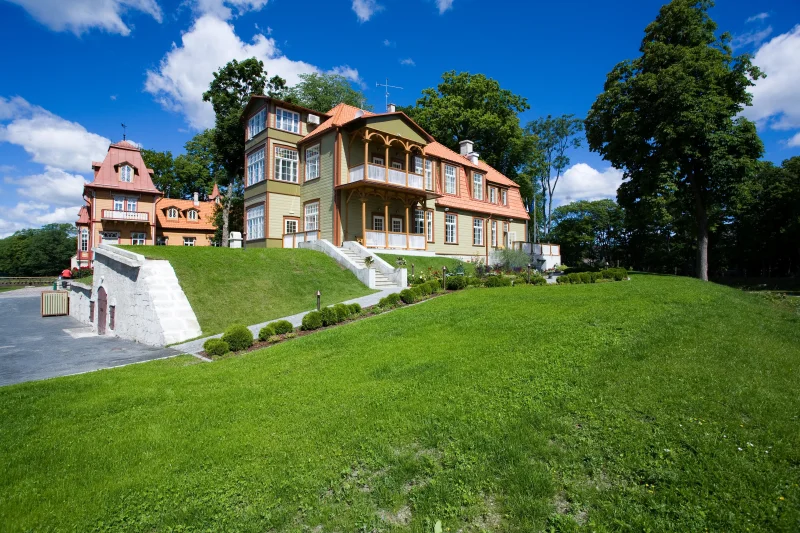
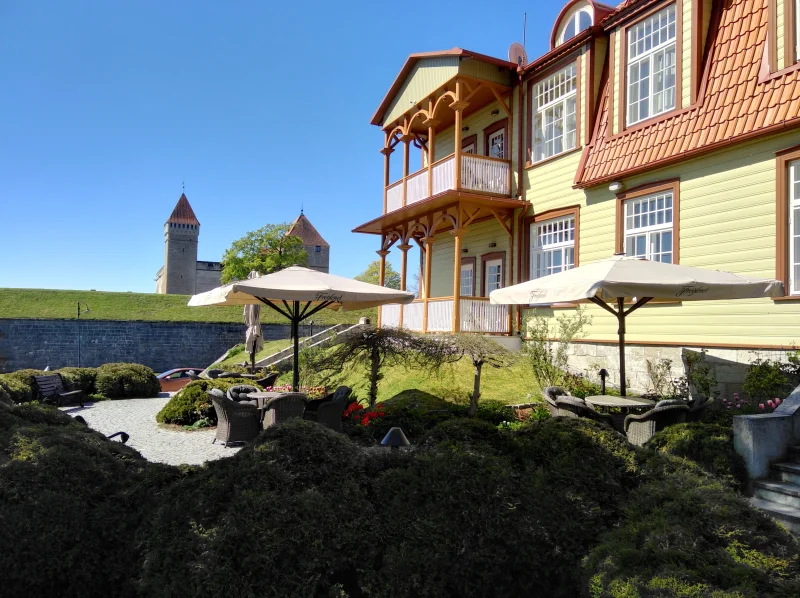
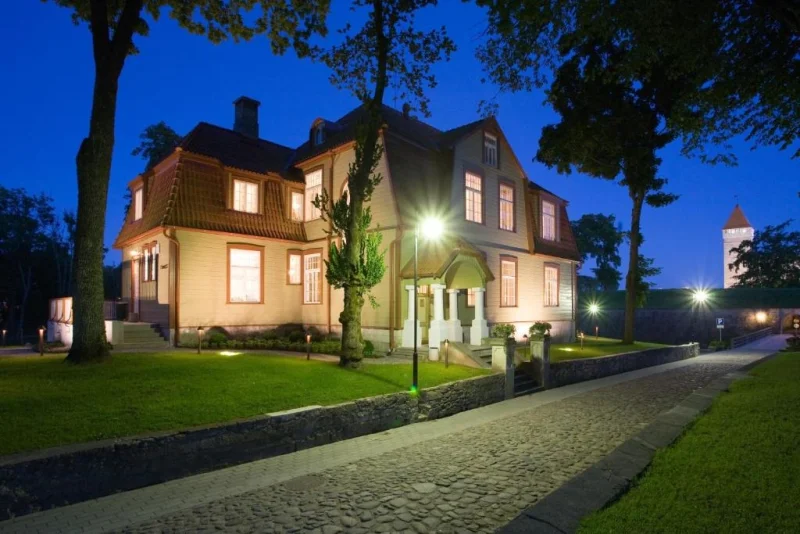
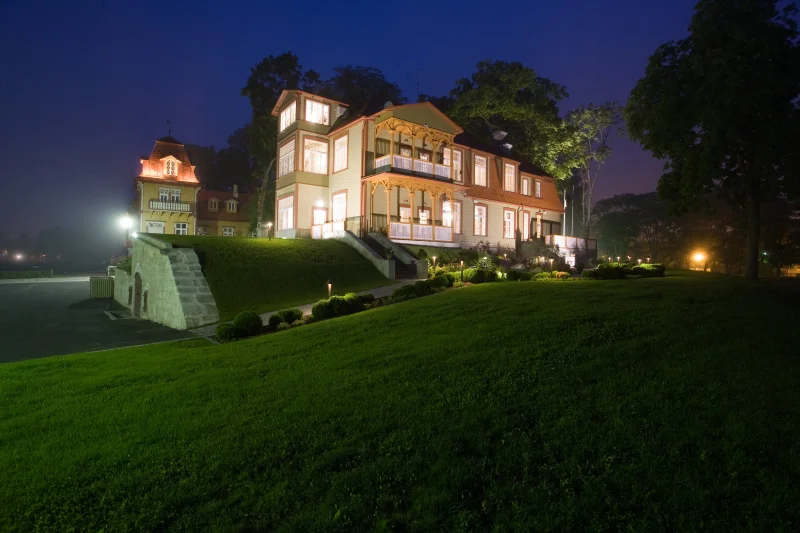
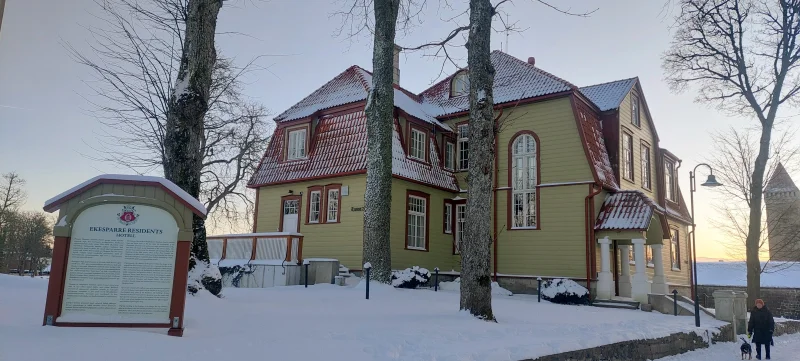
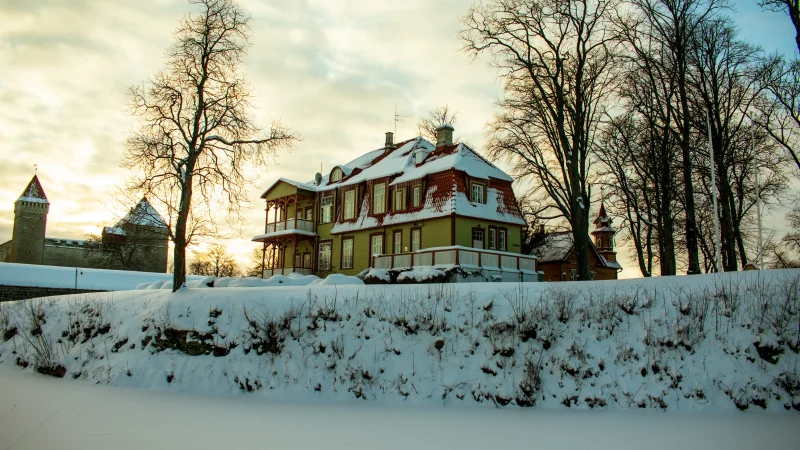
The construction of the Ekesparre Boutique Hotel building a hundred years ago followed the conditions and practices of the time. The foundations were built of limestone, partly obtained from collapsed masonry in the castle ramparts. The walls were hewn from squared horizontal logs. The roof was made of kiln‑fired clay tiles. In ground plan, the building was a house with a mansard storey, with spacious windows, an entrance with an impressive staircase, and verandas on the south side. The average height of the interior rooms was 3.4 m. The walls and ceilings were plastered on the inside (reed plaster mats), and on the outside the walls were clad with weatherboarding. Originally, 80% of the floors were covered with oak parquet. Heat was provided by plain tile stoves with a striking design.
Over time, insect damage appeared in the walls; in the washrooms, the prevailing damp caused the boards and beams to rot. In the rooms, the wallpapers became dirty and torn, and plaster fell from the ceilings. The roof tiles crumbled and rainwater penetrated inside. All this came from the fact that there was no permanent resident owner in the house: tenants and workers changed frequently; visitors stayed only briefly; and during the Soviet period there was frequent drinking, smoking and, at times, a certain amount of vandalism in the rooms.
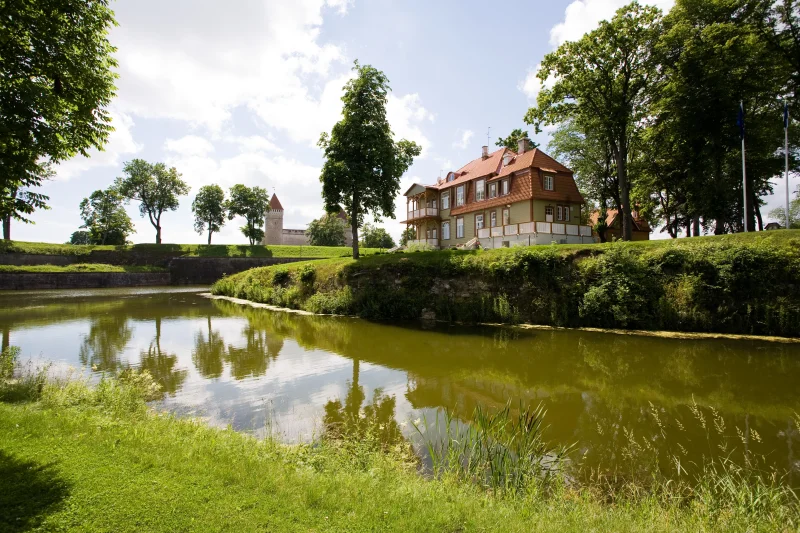
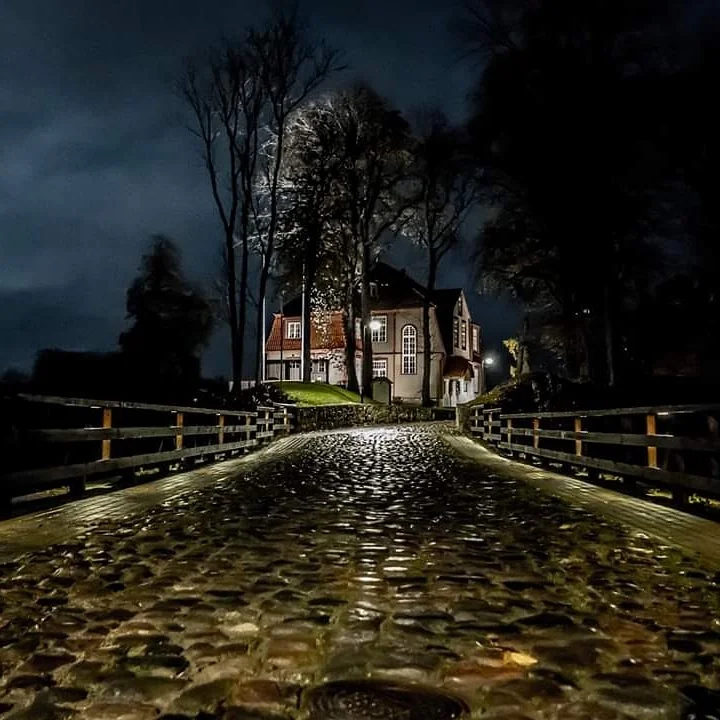
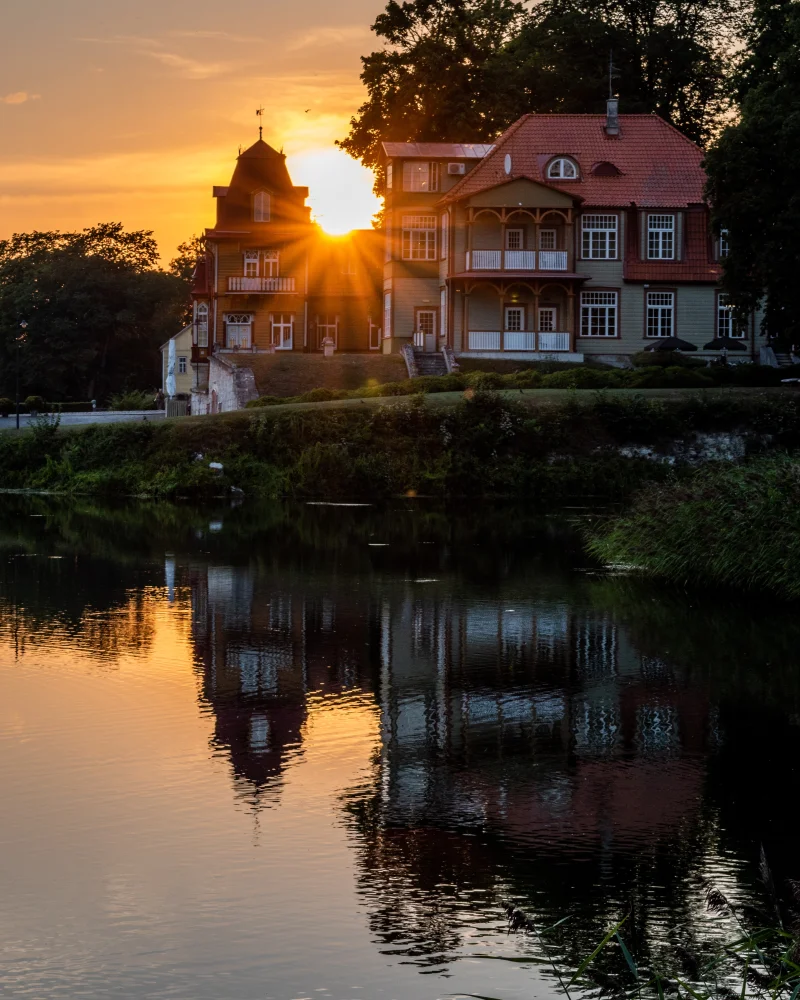
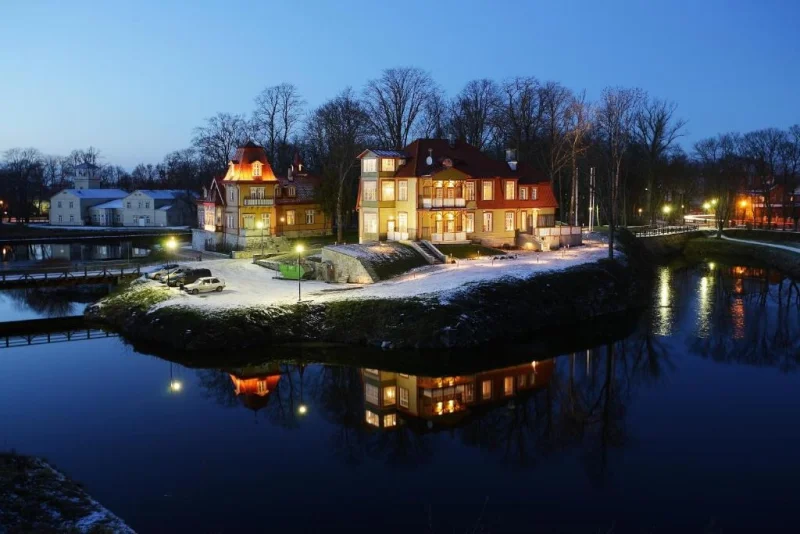
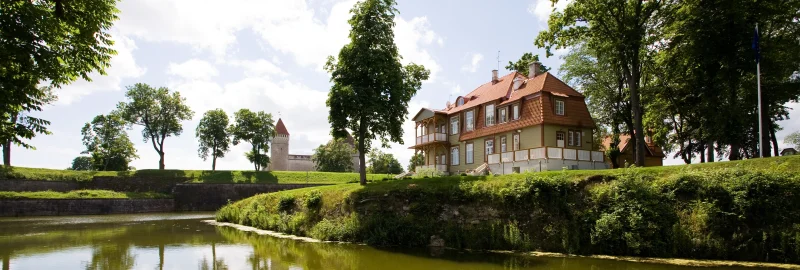
The charm of the Ekesparre Boutique Hotel, located on the castle ravelin, lies in its setting, where the simple grandeur of the building is reflected in the water surrounding the higher hill (the ravelin), framed by tall greenery.
Text: Bruno Pao, historian
Edited and supplemented by Ekesparre Boutique Hotel